
The Gaze of the Machine: Who Watches the Watchers?
The Gaze of the Machine: Who Watches the Watchers?
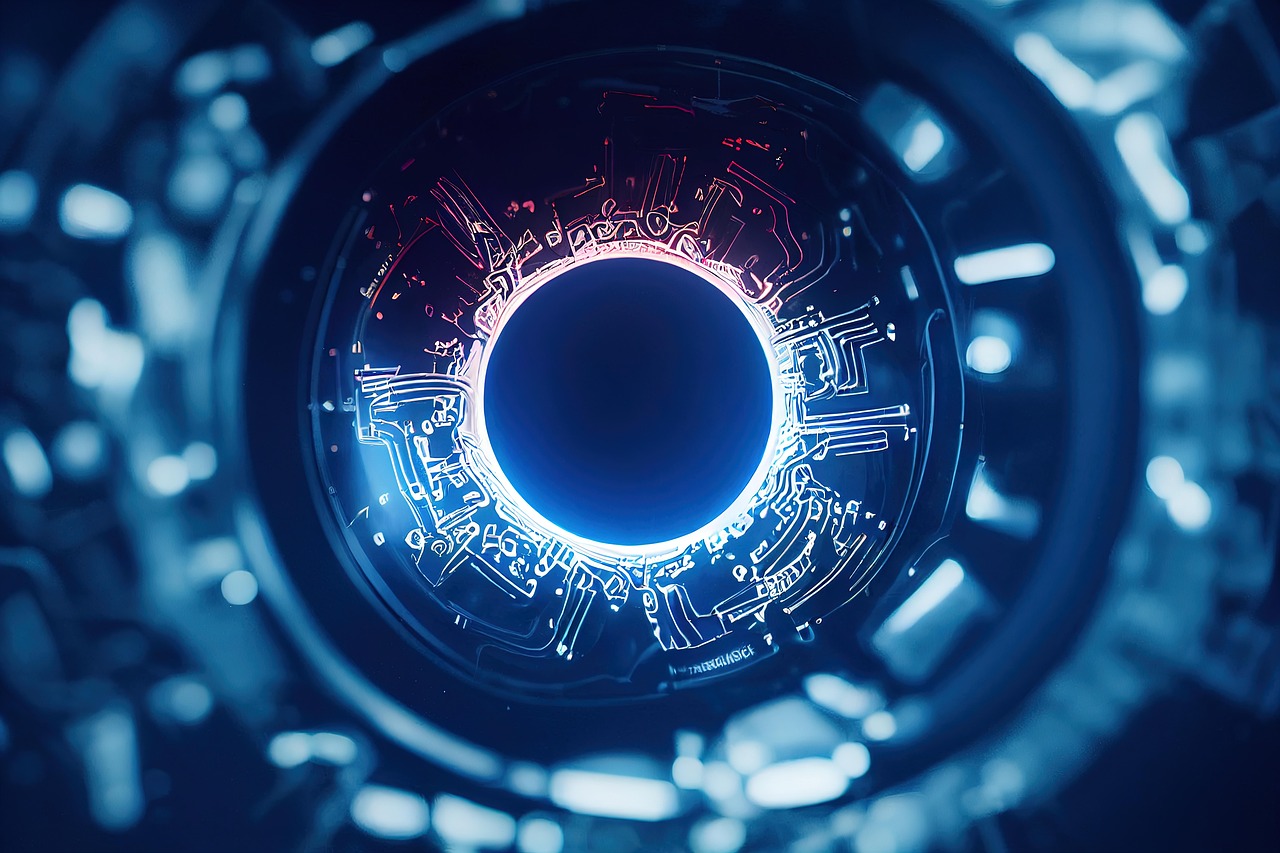
There is a moment, usually unremarked upon, when a city crosses an invisible threshold. One camera becomes ten. Ten become a thousand. A thousand become an interconnected web of silicon eyes, each one feeding a mind that never blinks, never forgets, never looks away.
We built these systems with the best of intentions. Safety. Order. The quiet promise that someone — or something — is always watching over us. But intentions, as history teaches us with tireless patience, are not outcomes.
The Architecture of Observation
Modern surveillance AI doesn’t merely record. It interprets. It reads the angle of your shoulders as you walk through a terminal. It measures the micro-expressions that flicker across your face in the half-second before you compose yourself. It knows you hesitated at the intersection — and it wonders why.
The architecture is elegant, in the way that spider webs are elegant. Each strand connects to every other, and at the center sits an algorithm that processes patterns faster than any human analyst ever could. The question is not whether this technology works. It works beautifully. The question is: for whom?
The Paradox of Perfect Safety
Consider the paradox: a city with zero crime is not necessarily a free city. A society where every action is observed, catalogued, and cross-referenced against behavioral models is not necessarily a just society. It is, at best, an orderly one — and order without liberty is merely a well-organized cage.
The watchers argue that those with nothing to hide have nothing to fear. But this argument collapses under even gentle scrutiny. Privacy is not the refuge of the guilty. It is the oxygen of the free mind — the space in which thoughts can form without judgment, where dissent can crystallize before it must face the world.
When Machines Learn Prejudice
Perhaps the most troubling aspect of AI surveillance is not its power but its biases. These systems learn from data generated by imperfect societies. They absorb our prejudices, codify our blind spots, and execute them at scale with mathematical precision.
A facial recognition system trained on skewed datasets doesn’t just make errors — it makes systematic errors. It sees threat where there is only difference. It flags anomaly where there is only diversity. And because it operates at the speed of computation rather than the speed of conscience, its mistakes compound before anyone thinks to question them.
The Way Forward
The path forward is not to abandon AI surveillance entirely — that ship has sailed, and in many contexts, these systems do genuine good. The path forward is to demand transparency, accountability, and the kind of fierce, unrelenting oversight that we once expected of democratic institutions.
Who watches the watchers? We do. We must. Not through more surveillance, but through more wisdom — the kind that recognizes that the most dangerous cage is the one we build for ourselves, convinced it’s a shelter.
The gaze of the machine is steady. The question is whether we have the courage to gaze back.